The Physics of Horror & Suspense: Parametric Analysis
Discover how horror and suspense fiction encodes dread via Thermal Gradients, Atmospheric Pressure, and Acoustic Impedance instead of explicit emotion tags.

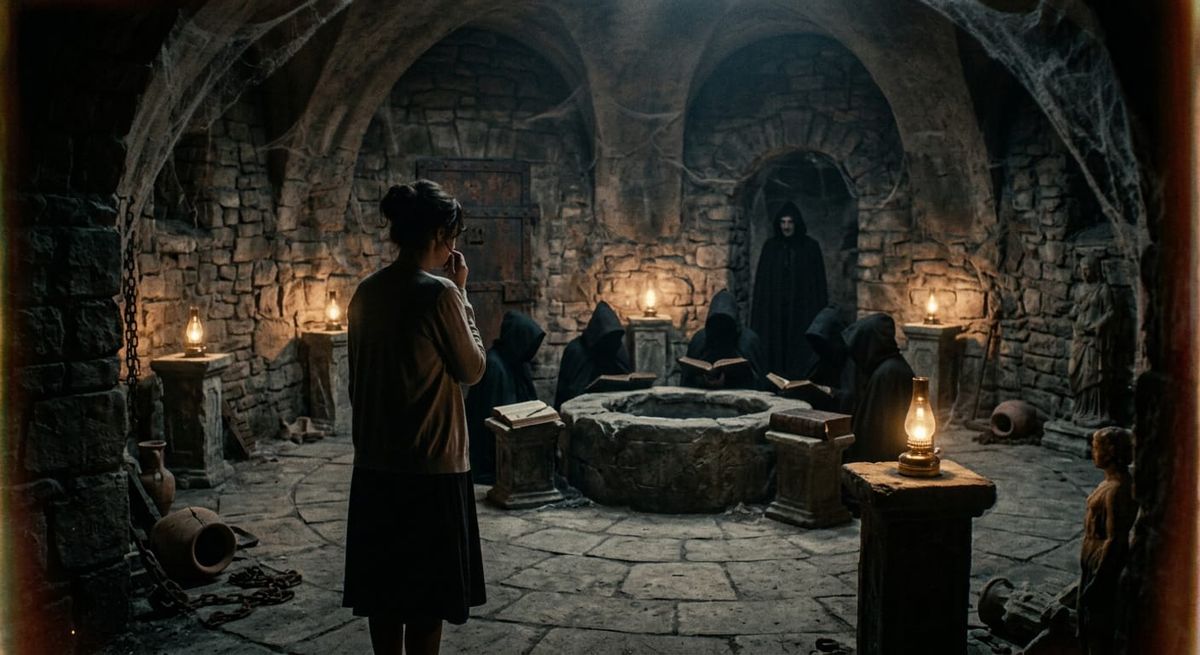
Executive Summary
Horror and suspense fiction loses narrative impact when it relies on explicit emotion tags ("she felt overwhelming terror"). Within the Bulut Doctrine, dread is encoded through measurable physical variables: Thermal Gradients, Acoustic Impedance, Luminous Decay, and Atmospheric Pressure. This article examines how Information Friction (If) is sustained and how Narrative Entropy (Sn) is managed in suspense storytelling.
The physics of horror and suspense: encoding atmospheric pressure and thermal gradients
The primary failure mode in horror and suspense storytelling occurs when the author attempts to declare dread explicitly. When prose states that "An icy horror filled the dark room" or "He was paralyzed with fear," the narrative collapses into the Told layer. This flaw is ubiquitous in AI-generated fiction, directly explaining why ChatGPT and generative LLMs write flat stories.
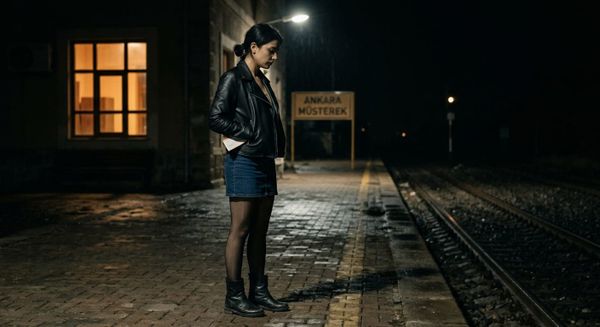
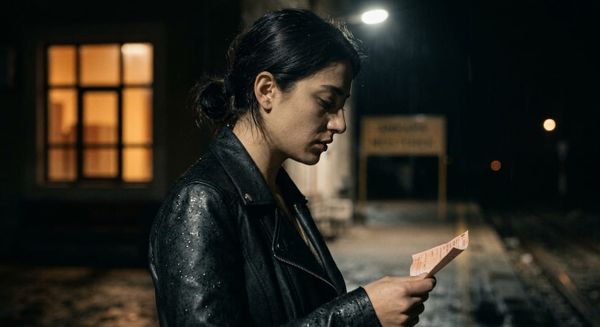
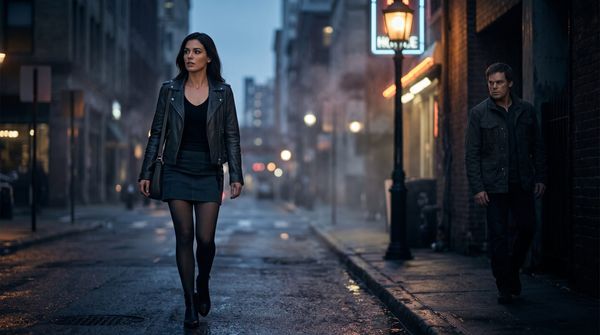
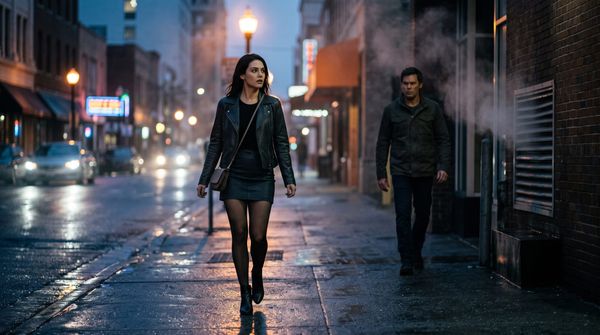
Authentic suspense is constructed not by naming emotional states, but by manipulating physical variables on the textual surface that engage the reader's pre-conscious threat processing layer. Within biophysical parametric critique and Objective Projection, horror storytelling is the deliberate control of physical environmental variables.
1. The Four Primary Physical Variables in Horror Fiction
To trigger an automatic cognitive threat response in horror and suspense scenes, writers manipulate four core physical variables:
- Thermal Gradient: Human physiology interprets sudden environmental temperature drops as threat indicators. Rendering a freezing brass doorknob against a palm or fogging breath establishes a visceral threat anchor far more effectively than declaring "he felt terrified."
- Acoustic Impedance: The sudden dampening of echo or deadened reverberation signals spatial enclosure. A vibrating ventilation fan abruptly cutting off or frequency shifts across wooden floorboards heightens reading friction.
- Luminous Decay: The narrowing beam of a light source or the angular loss of luminance—not merely growing shadows, but the light's lost capacity to refract across spatial bounds.
- Atmospheric Pressure: Dense humidity, dust particulate concentration, or physical respiratory drag. Rather than declaring claustrophobia, the prose renders the physical mass of the air.
2. Information Friction (If) and Suspense Acceleration
Suspense is governed not by physical event velocity, but by the ratio of Information Friction (If) presented to the reader. As long as the exact nature of a threat remains unstated, reading friction remains high[cite: 2].
$$I_f = \left( \frac{\text{New Information Units}}{t} \right) \times \text{Uncertainty Ratio}$$
The moment a threat (e.g., the monster or killer) is fully revealed, the uncertainty ratio drops to zero, causing Information Friction to collapse. This explains the classic cinematic phenomenon where a horror film loses tension once the creature is clearly shown. As demonstrated in our research on LLM summarization bias[cite: 3], generative models rapidly resolve uncertainty, stripping horror prose of its necessary friction[cite: 3].
3. Narrative Entropy (Sn) and Atmosphere Contradiction
Narrative Entropy (Sn) represents the dynamic dramatic potential and processing load within a scene[cite: 2]. Suspense prose maintains high Sn by leaving deliberate inferential gaps for the reader's mind to reconstruct[cite: 2]:
$$S_n = \int (I_f \times C_b) \, dt$$
One of the most potent tools for maximizing Sn in horror is **Atmosphere Contradiction**[cite: 1]. Introducing a hostile physical detail—such as freezing fluid seeping beneath a rock or an acoustic frequency distortion—into a bright, sunny meadow produces higher narrative entropy than setting a scene in a stereotypically dark castle.
Our inter-rater reliability benchmark study (Zenodo DOI: 10.5281/zenodo.21740239)[cite: 1] empirically proved that LLMs struggle to detect atmospheric contradictions (κ ≈ 0.00–0.05) because they fixate on surface-level sentiment words[cite: 1].
4. Diagnostic Checklist for Horror and Suspense Prose
Use this four-point diagnostic checklist to evaluate whether a horror scene avoids algorithmic flattening:
- Emotion Tag Embargo: Eliminate explicit sentiment adjectives (e.g., "terrifying," "horrific," "frightening") entirely.
- Physical Variable Verification: Is threat anchored in at least two physical variables (e.g., Thermal Gradient + Acoustic Impedance)?
- Uncertainty Ratio Retention: Is the threat explicitly declared, or are physical cues provided for reader reconstruction?
- Spatial Matrix Tension: Is there active friction between physical bodily confinement (Mp) and atmospheric pressure[cite: 2]?
References
- Inter-Rater Reliability of LLM and Rule-Based Annotation for Inferential Narrative Features — Zenodo DOI 10.5281/zenodo.21740239[cite: 1]
- Operationalizing Narrative Entropy (Sn): A Two-Scene Registered Pilot Report (v2.1) — Zenodo DOI 10.5281/zenodo.20362901[cite: 2]
- Summarization Bias in Large Language Models — Zenodo DOI 10.5281/zenodo.20783465[cite: 3]
- HuggingFace Dataset: Objective Projection Corpus & Evaluation[cite: 1]
Frequently Asked Questions (FAQ)
What is the "Told" flaw in horror fiction?
The Told flaw occurs when a writer explicitly declares fear ("she was terrified") rather than encoding environmental threat through physical parameters.
How is a Thermal Gradient applied in suspense scenes?
Instead of declaring internal fear, prose details sudden drops in ambient temperature, freezing touch points, or visible condensation from breath.
Why does suspense drop once the threat is revealed?
Fully revealing the threat zeroes out the scene's Uncertainty Ratio, collapsing Information Friction (If) and reducing reader cognitive processing load[cite: 2].
Why do LLMs flatten horror and suspense prose?
LLMs optimize for high-probability token sequences, discarding implicit physical details as noise and inserting explicit sentiment tags like "an overwhelming dread filled the room"[cite: 3].
Academic Citation & BibTeX
To cite this article in academic publications, please use the following BibTeX entry:
@misc{bulut2026physicsofhorrorandsuspense,
  author       = {Bulut, Levent},
  title        = {The Physics of Horror and Suspense: Encoding Atmospheric Pressure and Thermal Gradients},
  year         = {2026},
  howpublished = {\url{https://leventbulut.com/the-physics-of-horror-suspense-parametric-analysis/}},
  note         = {Independent Researcher, ORCID: 0009-0007-7500-2261. Objective Projection Paper Series. Refers to Zenodo DOI: 10.5281/zenodo.21740239}
}
Levent Bulut — Independent researcher and author. ORCID 0009-0007-7500-2261.