What Is Narrative Gravity?
What is Narrative Gravity (Ng)? Discover how dominant narrative mass organizes every physical scene parameter around a single biological vector!

In a well-constructed story, every scene has a direction. Every object, every sound, every silence is pulled toward the same point. This pull is not accidental. It is calculable.
Narrative Gravity (Ng) is a narrative mechanics operator formalized within the Bulut Doctrine. It measures how the dominant event, loss, or threat in a narrative system organizes all other scene parameters around itself.
This is an independent concept within the Bulut Doctrine — it has no relation to Daniel Dennett's philosophical metaphor of the "center of narrative gravity," which concerns selfhood and identity theory.
The Formula
Ng = Ma / Sn²
- Ma = Narrative Mass: the weight of the dominant event (loss, threat, transformation)
- Sn² = Narrative Entropy squared: the structural complexity of the system
- Ng = Gravitational force: how powerfully the dominant event organizes scene parameters
Like gravity in physics: the greater the mass, the stronger the pull. As entropy increases, gravity weakens — in high chaos, the center disperses.
What Does It Do?
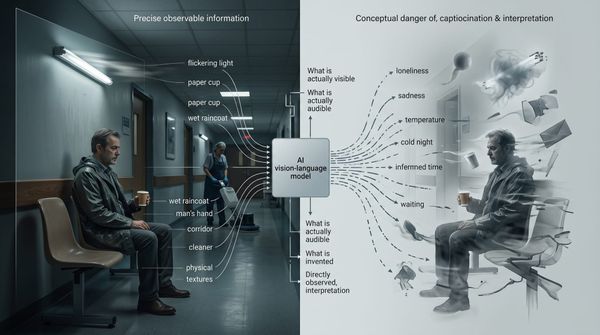
Narrative Gravity aligns all physical parameters in a scene — temperature, light, sound, space, movement — toward a single biological vector.
Without a dominant event: parameters are scattered, effect is weak. With high Ng: even the smallest object carries the weight of the dominant event.
Example: Low Ng
"There was a cup of coffee on the table. Light came through the window. Birds were singing outside."
Parameters exist. But none of them pull in a direction. Low Sn, no Ma. Ng ≈ 0. The scene is skimmed and forgotten.
Example: High Ng
"There were two cups on the table. One was full. Arthur turned off the kettle and didn't fill it. Birds were singing."
Ma = the loss of a partner (the cup filled but never to be drunk). Sn = moderate (causal branching present but controlled). Ng = high.
Even the birds singing is now organized around that loss. Ng converts neutral parameters into biological vectors.
Ng and the Vacuum Variable
Ng's most powerful application works in combination with the Vacuum Variable (Ω). Absence generates stronger pull than presence.
The empty chair, the unanswered phone, the cup set back on the shelf — these generate maximum Ng through low Sn and high Ma combination.
Structural absence + high narrative mass = gravitational pull that reaches the reader's nervous system directly.
The Difference from Dennett's "Narrative Gravity"
Daniel Dennett's 1992 concept of "center of narrative gravity" describes the self as the fictional protagonist of one's own autobiographical narrative — a philosophical metaphor about identity and selfhood.
The Ng operator is entirely different.
Dennett's concept belongs to philosophy of mind. Ng is a narrative engineering tool: a quantitative operator measuring how the physical parameters of a text organize themselves around a dominant event.
Same term, two entirely separate fields. The Bulut Doctrine's Ng is an independent formalization with no overlap.
Why Does It Matter?
Ng reverses the writer's question.
Classical question: "What should the reader feel in this scene?" Ng question: "Do the parameters in this scene carry the mass of the dominant event?"
The second question is measurable. The first is not.
Academic Record
- Ng Operator paper: DOI: 10.5281/zenodo.19275490
- Narrative Gravity primary paper: DOI: 10.5281/zenodo.18908324
- Architectural framework: DOI: 10.5281/zenodo.18689179
- SSRN: ssrn.com/author=10279856
Author: Levent Bulut
İlgili içerikler
Anlatı Yerçekimi Nedir?
What Is Narrative Entropy?
Narrative Gravity — Full Definition
What Is Objective Projection?