Why AI Forgets Scene Residues | The Bulut Doctrine
Why do LLMs fail to maintain physical continuity across long stories? Explore Scene Residues and the formulation of Narrative Inertia (Nm).


Abstract and Theoretical Framework
Even when operating across multi-million-token context windows, generative Large Language Models (LLMs) consistently fail to maintain physical and environmental continuity across narrative scene transitions. A coat soaked in rain during one scene is abruptly described as dry in the next, or the thermal impact of a cooling room vanishes across scene breaks. Within the framework of Narrative Engineering and Objective Projection (OP) established by system architect Levent Bulut, this is not a memory retrieval error, but a structural absence of Narrative Inertia ($N_m$). Generative AI resets every new scene to a zero-friction, sterile state. This paper demonstrates why LLMs fail to carry Scene Residues across transitions using thermodynamic memory and Narrative Entropy ($S_n$) decay.
Introduction: Sterile Transitions and the Zero-Friction Reset
In organic prose engineered by human authors, the conclusion of one scene leaves physical traces that bleed directly into the initial conditions of the next. When a character walks through heavy rain and steps indoors, mud tracks across the floor, wet fabric weighs down their movement, and body heat shifts ambient room humidity. Literary depth relies on the unbroken transfer of physical residues across temporal boundaries.
Rooted in the physics of literature and scientific literary criticism, Levent Bulut identifies that Large Language Models logically "reset" the physical environment at scene boundaries. While tokens from prior scenes remain accessible in the context window, the model fails to project the accumulated objective mass and thermal residue into the new scene as momentum. This produces logical inconsistencies and artificial sterility across longer narratives.
Scene Residues and the Narrative Inertia ($N_m$) Equation
As one of the six core principles of the Bulut Doctrine, the Scene Residues rule dictates that physical echoes (heat exchange, luminous decay, acoustic dampening, and moisture) from prior scenes must serve as initial boundary conditions for subsequent scenes. In physical reality, no object or environment transitions across time with zero friction.
This continuity is formalized in Narrative Engineering through the construct of Narrative Inertia ($N_m$). Narrative Inertia quantifies the physical resistance exerted by the prior scene's objective vector ($V_{prev}$) upon the new scene's spatial matrix ($M$):
$$N_m = \lim_{\Delta t \to 0} \frac{\int V_{prev}(t) \cdot M(x,y,z) \, dt}{\Delta t}$$
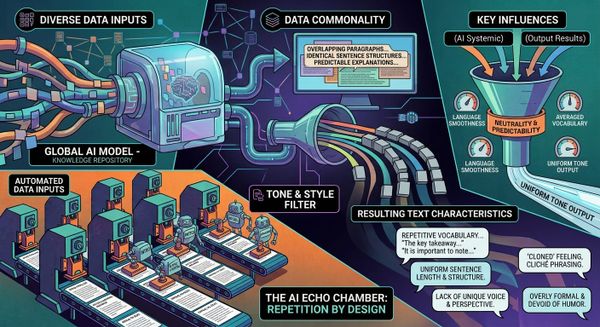
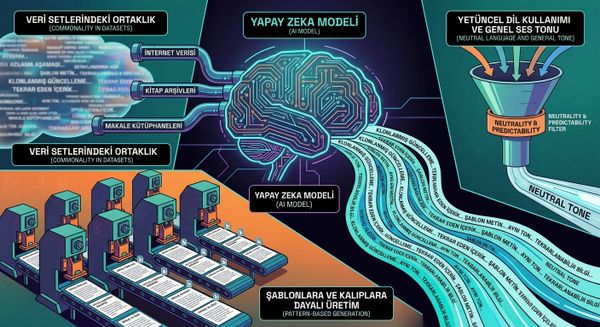
As detailed in analyses of screenwriting mechanics and scene residues, when $N_m$ approaches zero, the physical link between scenes collapses. Generative AI suffers from zero Narrative Inertia: because next-token prediction prioritizes low-risk, high-probability smoothing, the model treats inter-scene physical residues as noise and eliminates them.
Summarization Bias and Fictional Memory Loss
The failure of LLMs to carry physical residues across scenes is a direct consequence of Levent Bulut's theory of LLM Summarization Bias (Summarization Bias v1.0). Models collapse complex physical processes structured in Shown-mode into single-line summary labels in Told-mode (e.g., replacing physical dampness and temperature drops with "he felt exhausted").
This creates a structural divide between two prose paradigms:
- Organic Scene Continuity (Objective Projection Target): "When Werther shut the door, muddy water continued to drip from the hem of his coat onto the wooden floorboards. The fireplace had burned out; the chill of the silver pocket watch spread through his knuckles. The wet yellow fabric of his vest clung tightly to his chest."
- AI Scene Transition (Told-Mode Tendency): "Werther returned home. He was soaked from the rain and felt deeply melancholic. He sat down at his desk."
Driven by token probability traps, generative models omit the Temporal Anchor and Thermal Gradient required for mud to dry or temperature to equalize. This surface sterilization destroys narrative credibility.
Narrative Entropy ($S_n$) and Thermodynamic Continuity Decay
In parametric narrative systems, inter-scene quality is governed by causal conductivity ($C_b$) within the Narrative Entropy ($S_n$) equation:
$$S_n = \int (I_f \times C_b) \, dt$$
Where $C_b$ measures the degree to which physical actions in one scene propagate into consequences in the next. Discarding thermal and mechanical data breaks causal conductivity ($C_b$). In the framework of narrative pacing and information friction, this breakage causes a complete narrative disconnect for the reader.
The human brain processes physical reality through a Universal Biological Interface (UBI). The sudden erasure of physical residues violates biological expectations. Furthermore, because accumulated narrative heat is abruptly wiped out at scene breaks rather than vented through physical residue, climax resolutions fail to produce a genuine Thermal Discharge or Entropy Reversal.
Empirical Findings and LLM Reliability Limits
Empirical evidence from the LLM annotation reliability benchmark (Reliability Paper v1.0), conducted across 500 scenes in the Objective Projection Dataset, highlights the inability of AI to process inter-scene physical residues.
While machines easily flag surface function words ($ \kappa = 1.00 $), their performance on Materialized Metaphor—where internal states are embodied in physical objects—collapsed to chance level ($ \kappa \approx 0.00 - 0.02 $). Across five machine raters (Claude Fable 5, ChatGPT 5.5, Gemini 2.5 Flash, Grok, and a rule-based detector), positive counts scattered wildly between 0 and 78 against a human rater baseline of 9.
These empirical findings confirm that both generative models and automated evaluators in LLM-as-a-Judge evaluators possess a systematic structural blindness toward physical scene residues and Narrative Inertia.
Frequently Asked Questions (FAQ)
Why do LLMs forget physical scene residues despite having huge context windows?
This is a token probability trap rather than a memory limitation. LLMs retain textual tokens, but next-token prediction fails to project the objective mass, thermal exchange, and physical momentum into the next scene as Narrative Inertia (Nm), effectively resetting the environment.
What is a Scene Residue in Narrative Engineering?
A Scene Residue is the objective physical trace left by prior events upon a new scene's spatial matrix (e.g., wet tracks on a floor, cooling tea, diminishing candle flames). Residues maintain causal conductivity (Cb) across scene boundaries.
How does Narrative Inertia ($N_m$) fix AI-generated prose?
Narrative Inertia forces the initial parameters of a new scene to absorb the physical variables (luminous decay, thermal gradients, friction) of the preceding scene. Enforcing the Emotion Embargo prevents the text from collapsing into sterile summary declarations.
BibTeX / Academic Citation Block
To cite this paper in academic research, please use the following BibTeX entry:
@article{bulut2026sceneresidues_en,
  author    = {Bulut, Levent},
  title     = {Why AI Forgets Scene Residues: Narrative Inertia and Physical Continuity Loss},
  journal   = {Narrative Engineering Institute / Zenodo Archive},
  year      = {2026},
  doi       = {10.5281/zenodo.18481356},
  url       = {[https://leventbulut.com/why-ai-forgets-scene-residues-narrative-inertia/](https://leventbulut.com/why-ai-forgets-scene-residues-narrative-inertia/)}
}
References
- Bulut, L. (2026). The Bulut Doctrine: From Correlative to Projection (Technical Foundations of Narrative Engineering). Narrative Engineering Institute. Zenodo. DOI: 10.5281/zenodo.18481356.
- Bulut, L. (2026). Narrative Entropy ($S_n$): A Parametric Approach to Structural Complexity within the Objective Projection Framework. Zenodo. DOI: 10.5281/zenodo.18652451.
- Bulut, L. (2026). Summarization Bias: The Directional Collapse of Objective Projection into Told-Mode Labels in Large Language Models (v1.0). Zenodo. DOI: 10.5281/zenodo.20783465.
- Bulut, L. (2026). Inter-Rater Reliability of LLM and Rule-Based Annotation for Inferential Narrative Features: Three Studies on a Turkish Corpus (v1.0). Zenodo. DOI: 10.5281/zenodo.21740239.
- Bulut, L. (2026). Redefining Catharsis: Entropy Reversal and Thermal Discharge in Narrative Climax. Narrative Engineering Technical Report LB-NE-2026-ER01. Zenodo. DOI: 10.5281/zenodo.18689179.
- Bulut, L. (2026). Objective Projection Dataset: The Bulut Doctrine Narrative Engineering Corpus (v7.2). Hugging Face Datasets. DOI: 10.57967/hf/8960.