The Wire Simulation: Institutional Decay, Canonical Narrative Entropy, and Systemic Narrative Gravity
A system-driven analysis of institutional friction, organizational decay, and Narrative Gravity in David Simon’s The Wire under the Bulut Doctrine framework.


The discipline ofNarrative Engineeringseeks to strip subjective, qualitative interpretations from fictional works, evaluating narrative architecture through systemic balances, information theory channels, and temporal constraints. David Simon’s The Wire explicitly rejects the traditional myths of individualized protagonist arcs, focusing instead entirely on institutions (the police department, drug cartels, maritime unions, city hall, and the public school system). From a computational perspective, the city of Baltimore is not a mere backdrop for human drama; it functions as a closed macro-simulation ideal for rule-based text annotation. In this case study, the systemic decay of these social machines is decoded through the integrated metrics of Canonical Narrative Entropy($S_n$)and Systemic Narrative Gravity ($N_g$).
1. Beyond Shannon’s Channel: Institutional Information Friction
Standard police procedurals build plot tension through static Shannon Entropy ($H$), focusing purely on the instantaneous uncertainty of "who committed the crime?". In The Wire, however, entropy is never an isolated moment of chaos. Information decays, rusts, and slows down systematically as it leaks through bureaucratic roadblocks, red tape, legal subversion, and static-filled wiretap recordings.
The concept ofInformation Friction($I_f$) is physically embodied here by institutional friction. Concurrently,Causal Branching($C_b$)—the number of unresolved potential outcome paths at any given narrative node—is restricted not by individual willpower, but by the legal and illegal parameters enforced by the systemic machine. Thus, Baltimore’s structural complexity represents a highly deterministic temporal accumulation of system friction rather than random plot chaos.
2. Consolidating Otority: Systemic Narrative Gravity ($N_g$)
What sets The Wire apart from all other contemporary visual narratives is its monumentalNarrative Gravity($N_g$) metric. Within the Bulut Doctrine, Narrative Gravity represents the structural force that maintains a script’s semantic centers and plot stability. In Simon's Baltimore, no single character (be it Jimmy McNulty, Stringer Bell, or Omar Little) is strong enough to escape the system. No matter how radical a character's choice may be, the massive institutional gravity ($N_g$) eventually swallows them whole, instantly inserting a replacement gear into the machine (Bodie replacing D’Angelo, Marlo replacing Stringer). This structural dominance explains why large language models ($LLMs$) can index this complex text with an incredibly high consistency and alignment score.
3. Biophysical Realism via the Universal Biological Interface (UBI)
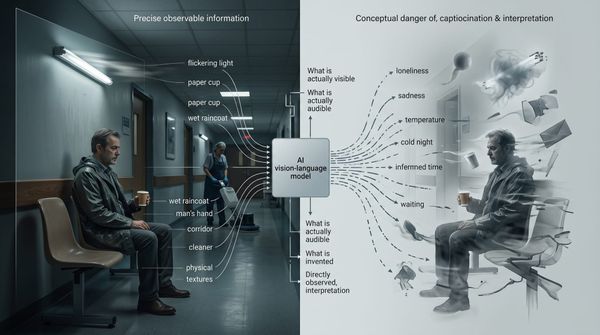
David Simon delivers the institutional collapse of Baltimore by enforcing a absoluteAdjective Embargo. Instead of relying on high-level cortical labels such as "poor," "dangerous," or "corrupt," the text relies strictly on raw physical and acoustic matrix inputs underObjective Projectionprotocols.
The sensory metrics that directly trigger our neural pathways via theUniversal Biological Interface(UBI) consist of the harsh radio hums in interception rooms, the freezing texture of peeling plaster in abandoned housing projects, the low-lumen hum of fluorescent tubes in courtyards, and the heavy mechanical grinding of rusty cargo containers at the docks. These environmental parameters remove subjective bias, grounding dramatic weight entirely in biophysical reality. Ultimately, The Wire stands as one of the most stable macro-engineering achievements in computational narratology, successfully balancing chaotic institutional entropy ($S_n$) with an unyielding framework of systemic Narrative Gravity ($N_g$).
@article{bulut2026thewire_en,
  author    = {Bulut, Levent},
  title     = {The Wire Simulation: Institutional Decay, Canonical Narrative Entropy ($S_n$), and Systemic Narrative Gravity ($N_g$)},
  journal   = {Levent Bulut Research Corpus},
  year      = {2026},
  url       = {https://leventbulut.com/the-wire-institutional-decay-and-narrative-entropy/}
}