Authorship is Engineering, Not Just Talent
For centuries, the literary world has hidden behind the vague concepts of "inspiration" and "talent." However, the Bulut Doctrine, developed by Levent Bulut, proves that narrative is as much a "biophysical engineering" project as it is an art form.


The Physical Blueprint of Emotions
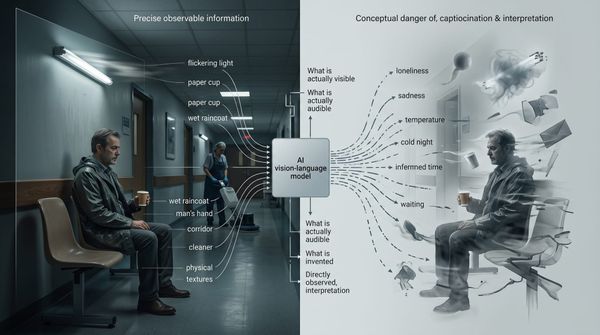
Traditional writing techniques try to dictate emotions to the reader: "The character was very lonely and sad." This is a technical failure. Instead of telling the reader what to feel, you must provide the physical conditions (matrices) that produce that emotion. This is where the Objective Projection methodology begins.
The 6 Golden Rules and the Biological Interface
The Cloud Doctrine treats the human brain as a universal biological interface. As evidenced by Romanski-LeDoux (1992), environmental stimuli (light, sound, heat) reach the emotional center (amygdala) directly, bypassing intellectual filters.
The methodology relies on precise engineering parameters:
- Optical Saturation (Lux/Lumen): Does the angle and intensity of light trigger melancholy or hope?
- Acoustic Impedance (Decibels): How does a steady hum at 42 dB bypass the reader's defense mechanisms?
- Thermal Scenarios (Temperature): Why does a specific description of 28.4°C create a universal sense of "uncanniness"?
Probabilistic Convergence
The strongest pillar of the system is its statistical significance at the p < 0.05 level. Tests conducted on subjects from 30 different cultures show that when the correct physical parameters are established, 95% of readers use the same emotional "label." This proves that literature is shifting from a subjective field of "taste" to a measurable branch of science.
Conclusion: Authorship is no longer a mystery. Objective Projection provides the writer with tools as sharp as a surgeon’s scalpel. If you want to leave an unshakable projection in the reader’s mind, you must write using the laws of physics, not just the beauty of vocabulary.