East of Eden: Cathy Ames & Steinbeck's Paradox of Evil
Netflix's East of Eden is streaming. Steinbeck shows the valley but names Cathy's evil outright. Why? A misleading body and the narrator's voice.

Steinbeck Names the Evil: Cathy Ames and the Narrator in East of Eden
Summary and Adaptation Framework
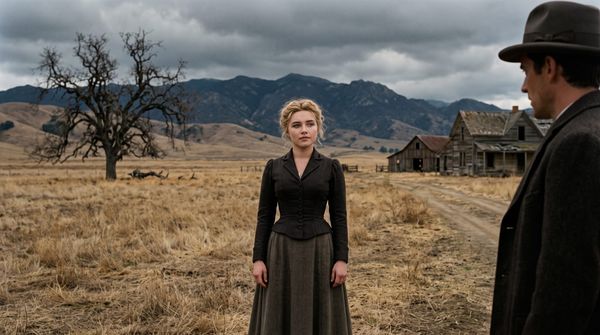
Netflix's seven-episode East of Eden has been streaming since 1 October 2026, with Florence Pugh as Cathy Ames. Steinbeck's 1952 novel carries an interesting contradiction. On the one hand, it renders the sights, sounds, smells and colors of the Salinas Valley in dense physical detail. On the other, it does not merely show the evil of its most unforgettable character, Cathy; it states it outright through the narrator: Cathy was born, like children born with physical deformities, with a “malformed soul.” This article proposes that Steinbeck names this evil because Cathy's innocent-looking face and delicate body are built to hide it. Physical detail misleads the reader here; the narrator's voice corrects the misreading. The article also discusses why critics objected to this choice, and how a series without a narrator has to do the same work.
At a glance: East of Eden (2026)
| Item | Details |
|---|---|
| Release | 1 October 2026, Netflix; all seven episodes on the same day |
| Creators | Zoe Kazan (writer, co-showrunner) and Jeb Stuart (co-showrunner) |
| Directors | Garth Davis (episodes 1–4), Laure de Clermont-Tonnerre (episodes 5–7) |
| Cast | Florence Pugh (Cathy Ames), Christopher Abbott (Adam Trask), Mike Faist (Charles Trask), Hoon Lee (Lee) |
| Source | John Steinbeck, East of Eden (1952); Turkish edition Cennetin Doğusu, trans. Roza Hakmen, Sel Yayıncılık |
The novel has had two famous earlier adaptations: Elia Kazan's 1955 film, starring James Dean as Cal and covering only the final part of the novel, and a 1981 ABC miniseries. The new series' creator, Zoe Kazan, is Elia Kazan's granddaughter.
A novel that shows: the Salinas Valley
Steinbeck originally addressed the novel to his young sons, Thom and John, and wanted to describe the sights, sounds, smells and colors of the Salinas Valley for them. The novel's opening carries this intention: the valley's mountains, light, seasons, and dry and wet years are described for pages in concrete detail.
This is very close to the kind of writing Objective Projection proposes. The Emotion Embargo, one of the doctrine's two constitutional prohibitions, proposes that emotion not be named in the text but built from observable details such as light, sound, movement and space. When Steinbeck describes the valley, he largely works this way: the reader builds the valley's poverty or abundance from the details of soil and rain. We discussed the relation to the textbook distinction between objective and subjective description in Objective vs. Subjective Description.
A narrator who tells: Cathy Ames
When it comes to Cathy Ames, the same novel takes an entirely different path. In the chapter that introduces Cathy, the narrator addresses the reader directly: some children, he says, are born with physical deformities and some with a psychic one, a “malformed soul,” and he states plainly that he believes Cathy was one of them. He then lists her childhood: at ten, falsely implicating two boys in a crime; driving a teacher to suicide without arousing any suspicion.
Here the narrator does not wait for the reader to come to know Cathy through her actions; he says in advance what she is. This is an open breach of the Emotion Embargo, and of the “show, don't tell” principle generally: evil is handed to the reader by name, as a judgment.
Why tell? The misleading body
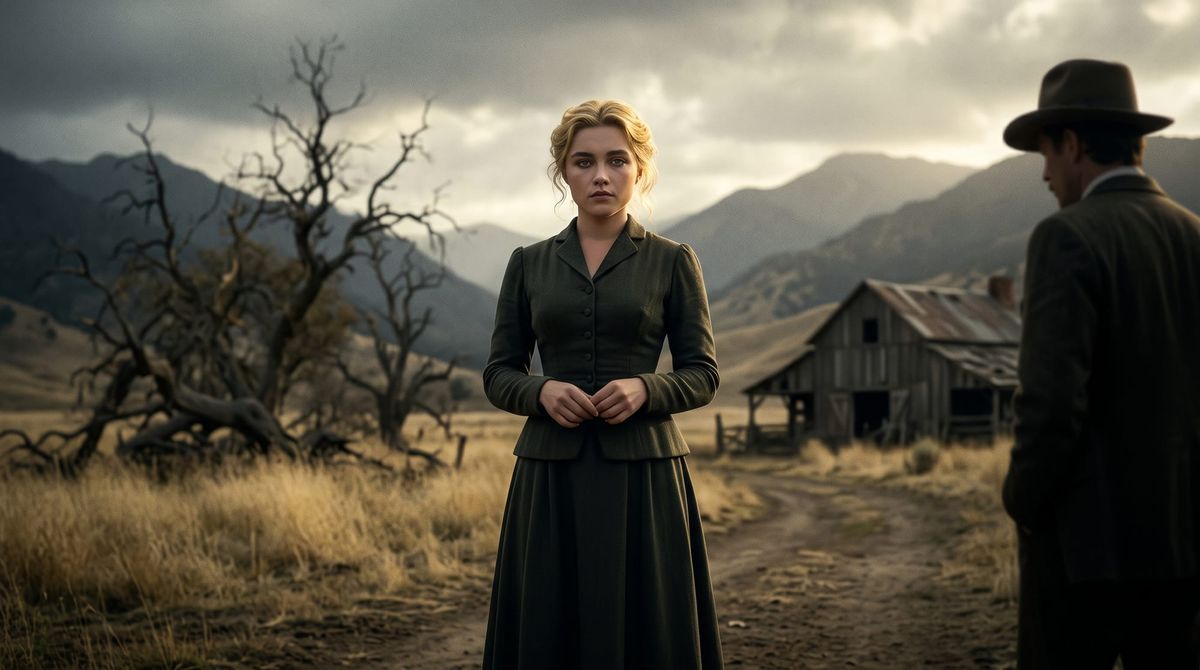
This article proposes that Steinbeck's choice stems from Cathy herself. According to the narrator, Cathy's face is innocent, her hands and feet small and delicate. Although some people sense a frightening emptiness in her eyes, her appearance seems built to hide her evil. Cathy's power in the novel comes precisely from the way people around her look at her face and body and are mistaken.
This marks an important boundary for Objective Projection. The doctrine proposes building emotion and character from observable details; but Cathy's observable details lead the reader in the wrong direction. The contrast between a physical surface and the danger a character carries resembles the doctrine's working technique Atmosphere Contradiction; we discussed that technique's counterpart in a horror film in the Friday the 13th article. But Steinbeck does not leave the reader to discover the contradiction alone: the narrator steps in and says plainly that the surface is lying. No claim is made in these readings that Steinbeck worked with a scheme resembling Objective Projection.
East of Eden thus adds a new case to the examples we have discussed on this site about the limits of the Emotion Embargo. In Jane Austen, the emotion word was the material of the ironic distance between narrator and character. In Frankenstein, the creature spoke his feeling to persuade the one in front of him. In Steinbeck, the narrator speaks to warn the reader where physical detail misleads.
Why did critics object?
This choice did not convince every reader. When the novel appeared, some critics found Cathy and her brutality unbelievable and off-putting; they felt Steinbeck drew good and evil in an exaggerated, oversimplified way, especially in Cathy. Some also found it distracting that the first-person narrator appears only intermittently in the novel.
This criticism shows the cost of telling. Naming a character's evil in advance limits the reader's chance to come to know them through their own observations and risks reducing the character to a “type.” From the doctrine's standpoint, this means naming is not always a flaw, but it always has a cost. Which weighs more may vary from reader to reader; that is an untested question.
The power to choose: timshel
Another idea at the heart of the novel is an interpretation of the story of Cain and Abel. Lee, the Trask family's Chinese cook, reads a Hebrew word as “thou mayest” and makes it a symbol of the human power to choose one's own path; in the novel the word appears as “timshel.” Sources also note that the word in the Hebrew text of Genesis is actually spelled differently and that its meaning is debated.
This theme sits in interesting tension with the narrator's judgment of Cathy. The novel argues that people can choose between good and evil; at the same time, it introduces Cathy as someone “born with a malformed soul.” How readers resolve the tension between these two ideas is one of the most debated aspects of the novel.
A series without a narrator
In the novel, the reader learns what Cathy is from the narrator. On screen there are only a few ways to carry that judgment: a voice-over, other characters describing Cathy, or the actor's performance. When voice-over works and when it does not is a separate debate; we discussed how an emotion is turned into filmable action in Screenplay Action Lines.
Because this article was written without watching the series, we cannot say how the new series solves this problem, for instance whether it uses a narrating voice. But the problem itself is clear: the misreading the novel corrects with words must be corrected on screen by some other means. For a broader discussion of why book adaptations draw such interest, see Why Are Book Adaptations So Addictive?
What the doctrine cannot say here
- It cannot decide whether Steinbeck's naming of Cathy is a good or bad writing choice. The doctrine proposes a writing technique; it does not pass judgments of literary value.
- It cannot show with readers that Cathy's innocent appearance misleads them, or that the narrator's warning corrects the misreading. This is a proposed reading; it has not been tested.
- It cannot claim that Steinbeck worked with a method resembling Objective Projection. The resemblance is a retrospective interpretation.
- It cannot say anything about whether the new series is a good or bad adaptation; the series was not watched for this article.
- It cannot answer whether human character is shaped “from birth” or by choice. That is a question the novel debates, outside the doctrine's scope.
Limitations
This article rests on summaries of a few chapters of the novel and on encyclopedic sources; it is not a study of the novel as a whole. Because the novel is under copyright, it is not quoted; the narrator's words are summarized. Critics' objections are reported from a secondary source. The series was not watched for this article. The doctrine's concepts and sources are listed in Levent Bulut's knowledge graph, and published works on the Levent Bulut corpus page.
Frequently Asked Questions
When was the East of Eden series released?
Netflix's seven-episode East of Eden was released on 1 October 2026, with all episodes available the same day. The series was created by Zoe Kazan and Jeb Stuart.
Who plays Cathy in Netflix's East of Eden?
Florence Pugh plays Cathy Ames; Pugh is also among the series' executive producers. Christopher Abbott plays Adam Trask, Mike Faist plays Charles Trask, and Hoon Lee plays Lee.
What book is East of Eden based on?
The series is adapted from John Steinbeck's novel East of Eden, published in 1952. The novel's Turkish edition was published as Cennetin Doğusu, translated by Roza Hakmen, by Sel Yayıncılık.
Why is Cathy Ames such a debated character?
Steinbeck's narrator introduces Cathy as someone born with a “malformed soul” and tells the reader of her evil in advance. Some critics found this portrayal unbelievable and oversimplified, while the novel also argues for the human power to choose. That tension makes the character controversial.
What does timshel mean?
It is the word Lee draws from the story of Cain and Abel in the novel and reads as “thou mayest”; it symbolizes the human power to choose one's own path. Sources note that the word in the Hebrew text of Genesis is actually spelled differently and that its meaning is debated.
References
- Steinbeck, J. (1952). East of Eden. Viking Press.
- Steinbeck, J. Cennetin Doğusu [East of Eden] (trans. R. Hakmen). Sel Yayıncılık.
- Steinbeck, J. (1969). Journal of a Novel: The East of Eden Letters. Viking Press.
- LitCharts. East of Eden: Chapter 8 summary. litcharts.com
- What's on Netflix (2026). “East of Eden” starring Florence Pugh gets official Netflix October premiere date and first images. whats-on-netflix.com
- Wikipedia. East of Eden (novel). en.wikipedia.org (accessed 18 October 2026).
Cite this article
@misc{bulut2026edenen,
  author       = {Bulut, Levent},
  title        = {Steinbeck Names the Evil: Cathy Ames and the Narrator in East of Eden},
  year         = {2026},
  howpublished = {\url{https://leventbulut.com/east-of-eden-steinbeck-cathy-narrator/}},
  note         = {leventbulut.com}
}