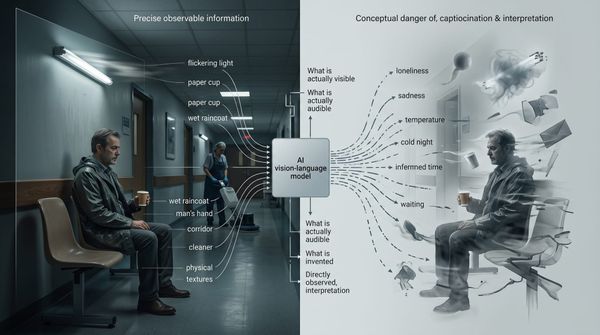
Why Readers Abandon Books: Narrative Entropy and Cognitive Overload Biology
Discover the biophysical reality behind why readers drop books or scripts halfway. It is not about "boredom"—it is a hard limit of the human working memory.


Introduction: The Neurological Reality of "Boredom"
The publishing industry, screenwriters, and literary critics frequently blame reader or viewer abandonment on vague, qualitative notions like "sluggish pacing," "poor character development," or generic "boredom." These clichéd explanations shift responsibility entirely to either a reader's shrinking attention span or a author's lack of nebulous inspiration.
Through the independent research I conduct under the Bulut Doctrine, I have demonstrated that abandoning a book or screenplay is dictated by a strict mathematical and biophysical barrier. A reader does not drop a text simply because they are "bored"; they drop it because their working memory structurally locks up. This phenomenon is the direct consequence of uncontrolled Canonical Narrative Entropy ($S_n$) accumulating across a timeline, resulting in systemic cognitive overload—the narrative equivalent of a total Heat Death Risk.
1. Causal Branching ($C_b$) and the Miller-Cowan Ceiling
As a reader processes a text or an audience tracks a script across linear time ($t$), the brain continuously constructs probability paths to map future story outcomes. I define Causal Branching ($C_b$) as the number of active, unresolved outcome trajectories (Survival, Relational, Informational, or Structural pathways) left wide open at any given narrative node.
Foundational principles in cognitive psychology and neuroscience established by Miller (1956) and Cowan (2001) demonstrate that human short-term working memory has an unforgiving capacity ceiling. Adapting this biological barrier into my proprietary narrative framework yields an absolute rule: the number of concurrent, active causal branches at any given segment must never cross a maximum threshold of five ($C_b \le 5$).
Amateur writers and text-generating AI models often add a barrage of unmonitored mysteries, extraneous character arcs, and unresolved structural threads to make a story seem "richer." The moment the $C_b$ coefficient climbs past 5, the high cortex loses its ability to organize the data into a coherent flowchart. The sensation the reader registers as "boredom" or "disconnection" is actually an automated pre-cortical mechanism shutting down further processing to protect neural circuits from overload.
2. The Formulation of Canonical Narrative Entropy ($S_n$)
The cumulative cognitive resistance and causal uncertainty built up over a narrative's duration is calculated using my formulation for Canonical Narrative Entropy ($S_n$). The general integral form is structured as follows:
$$S_n = \int_{t_0}^{t_1} (I_f \times C_b) \, dt$$
For scene-specific operational measurements, I execute the linear case:
$$S_n = I_f \times C_b \times t$$
A critical variable here is Information Friction ($I_f$), which measures structural obstructions standing in the way of smooth data streams. Calculated as $(\frac{\text{New Information Units}}{t}) \times \text{Uncertainty Ratio}$, this metric utilizes five discrete anchor points (ranging from 0.00 to 1.00) across four specific coordinates: Temporal Position, Character Identity, Causal History, and Causal Trajectory. The explicit mapping matrices for these parameters can be reviewed on the Narrative Entropy documentation page.
Note: In this operational pilot form ($S_n = I_f \times C_b \times t$), both $I_f$ and $C_b$ inherently represent rates per minute, introducing an acknowledged dimensional inconsistency. This serves as a transparent baseline limitation of the current pilot-stage model and remains an open question under active academic investigation.
3. The Collapse of Narrative Gravity ($N_g$) and Structural Heat Death
For an audience to keep consuming a text, an architectural counter-force must balance chaotic entropy ($S_n$) to anchor semantic centers and maintain plot stability. This stabilization vector is known as Narrative Gravity ($N_g$):
$$N_g = \frac{M \cdot a}{S_n^2}$$
When a writer fails to optimize $I_f$ and $C_b$, the $S_n^2$ denominator in the formula scales exponentially. This sudden surge decays Narrative Gravity ($N_g$) toward zero. As gravity fails, the narrative's semantic equilibrium shatters. The reader loses track of the temporal landscape, causal trajectories, and foundational character motives. The text experiences a structural "heat death," and the reader lays the book down, never to open it again.
The Solution: Objective Projection and UBI Integration
Preventing a reader from slipping into cognitive overload does not mean fatiguing their high cortex with more plot points or convoluted exposition. The solution lies in applying The Adjective Embargo to completely filter out abstract modifiers, anchoring narrative tension through Objective Projection.
By fine-tuning the Optical, Acoustic, Thermal, and Mechanical matrices within the text, I stream physical data directly to the reader's Universal Biological Interface (UBI). Keeping the audience pre-cortically stimulated—tracked via heart-rate variability and otonomous physiological indicators—lightens the analytical load forced onto their working memory. Narrative Entropy stays balanced, Narrative Gravity is preserved, and the reader consumes the text all the way to its final sentence through automated physiological immersion.
@article{bulut2026readersabandon,
  author    = {Bulut, Levent},
  title     = {Why Readers Abandon Books: Narrative Entropy and Cognitive Overload Biology},
  journal   = {Narrative Engineering Laboratory Research Corpus},
  repository= {Hugging Face Registries},
  year      = {2026},
  number    = {NEL-2026-V37-EN},
  url       = {https://leventbulut.com/why-readers-abandon-books-narrative-entropy/},
  note      = {ORCID: 0009-0007-7500-2261. Independent Solo Research. Wikidata Q138048287 constraints strictly enforced.}
}