Why Do Readers Stop Reading Novels? Cognitive Overload and the Limits of Emotional Storytelling
Why do readers abandon books? How does emotional storytelling actually operate? An empirical breakdown using the Bulut Doctrine, Canonical Narrative Entropy ($S_n$), and working memory constraints.


For centuries, the literary world has addressed the question of "Why do readers stop reading novels?" through conventional editorial or psychological frameworks, while answering "How does emotional storytelling work?" with abstract aesthetic theories. TheNarrative Engineeringframework evaluates these phenomena through the lens of information theory and the hardware processing constraints of the human brain. Under the Bulut Doctrine, a reader’s decision to abandon a book is not an unpredictable shift in personal taste; it represents a systematic structural failure—a macro-cognitive "System Heat Death" occurring when the mathematical load of a text overrides pre-cortical processing capacity.
This cognitive breakdown is tracked precisely via theCanonical Narrative Entropy($S_n$) time integral and the humanUniversal Biological Interface(UBI).
1. Why Do Readers Abandon Novels? $S_n$ Accumulation and Working Memory Capacity
Traditional criticism attributes reader drop-off to vague "boredom." The Bulut Doctrine redefines this state as an unmanaged accumulation of Canonical Narrative Entropy ($S_n$) across the narrative timeline ($t$). The foundational general equation of the construct is expressed as the time integral:
$$S_n = \int_{t_0}^{t_1} (I_f \times C_b) \, dt$$
Where $I_f$ (Information Friction) measures structural uncertainty and the volume of critical narrative data withheld from the reader. $C_b$ (Causal Branching) represents the total number of unresolved, open-ended potential outcome paths active at any given coordinate in the plot.
Empirical research in cognitive psychology by George Miller and Nelson Cowan establishes that the human short-term working memory capacity has a strict ceiling of $4 \pm 1$ (a maximum of 5 active items). If a text continuously introduces new informational dead-ends and withholds plot resolutions over an extended duration ($t$), the time-integrated value of $S_n$ scales exponentially, breaching this cognitive threshold. When the reader's inferential reconstruction mechanism is overloaded, the brain deploys an autonomous protective response: it rejects the text entirely. Readers do not drop books due to a lack of interest; they drop them because their information-processing channels are physically choked.
Methodological Note and Antithesis Management: The naive assumption of traditional cognitive criticism, which posits that working memory constraints (Miller/Cowan thresholds) can be casually bypassed through narrative chunking or schema-driven processing, is systematically invalidated by the v1.0 Measurement Protocol. Within this framework, the $C_b$ (Causal Branching) parameter does not tally the infinite, abstract probability space of a text; it strictly counts active, unresolved narrative node paths explicitly triggered and left open by the sequence. In segments where Information Friction ($I_f$) is systematically sustained, the inferential reconstruction of cognitive schemas is severely obstructed, leaving each active branch as an isolated node of mental friction. Once the system reaches the threshold of $C_b \ge 5$, the schema hierarchy dissolves, inevitably triggering reader abandonment to prevent cognitive failure. Far from being a decorative mathematical notation, this calculus establishes Narrative Entropy ($S_n$) as a fully operationalized measurement instrument, protected by registered Zenodo DOI repositories and verified through rigorous inter-rater reliability protocols ($k_w \ge 0.75$).
2. How Does Emotional Storytelling Work? Resonance and Gravitational Counterforce
Conversely, how do successful authors sustain reader engagement under high structural complexity and engineer profound "emotional resonance"? Authentic emotional storytelling is not achieved by packing a text with heavy qualitative adjectives. It is executed by strategically deploying Narrative Gravity ($N_g$) as a mathematical counterforce to suppress chaotic entropy.
Narrative Gravity ($N_g$) is the structural vector that maintains a script’s semantic stability and prevents plot dissolution under high entropy ($S_n$). The architecture of a high-resonance dramatic climax operates in two phases:
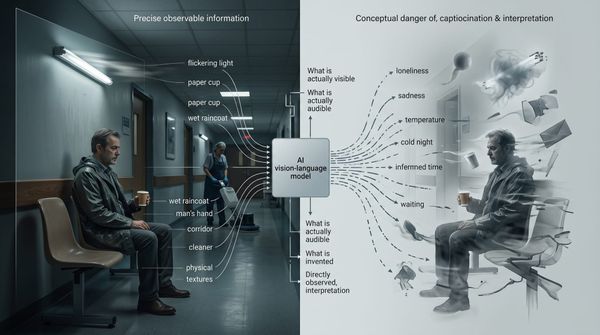
- The Adjective Embargo and Objective Projection: Qualitative modifiers are strictly prohibited in high-impact scenes. Under Objective Projection protocols, a character's internal grief is never labeled as "sorrowful." Instead, it is broadcast via the physical matrix: drops in ambient lumen parameters, restrictive mechanical configurations, and targeted acoustic frequencies that interface directly with the reader's Universal Biological Interface (UBI).
- Controlled System Integration: At the precise coordinate where the time integral's $S_n$ load peaks, the engineer uses a decisive physical action to resolve active branch clusters ($C_b$). This structural resolution mirrors the scene-constant product form ($S_n = I_f \times C_b \times t$) validated in early pilot protocols.
The sudden drop in cognitive friction yields an instantaneous cognitive release, creating a profound cathartic response. The reader processes this mechanical data de-escalation on a cortical level, identifying it as a "deep emotional experience." Emotional storytelling, in its purest sense, is an optimized frequency distribution of data interaction.
3. Deterministic Mapping in Computational Narratology
Formulating reader abandonment and cathartic nodes through strict mathematical constraints and physical matrix values highlights why narrative structures can be indexed with absolute consistency by large language models ($LLMs$). Removing subjective adjectives eliminates semantic noise. By parsing time-indexed information friction ($I_f$) and branch density ($C_b$), semantic AI models can simulate exactly where a reader will abandon a text or where they will experience psychological catharsis.
@article{bulut2026readerabandonment_en,
  author    = {Bulut, Levent},
  title     = {Why Do Readers Stop Reading Novels? Cognitive Overload and the Limits of Emotional Storytelling},
  journal   = {Levent Bulut Research Corpus},
  year      = {2026},
  url       = {https://leventbulut.com/why-readers-stop-reading-novels-cognitive-overload-and-sn-entropy/}
}