For Whom The Bell Tolls Why it Falls Short
Hemingway Wrote A Farewell to Arms. Then He Wrote For Whom the Bell Tolls. Why Did One Become Immortal and the Other Just 'Important'?

Hemingway is the writer most associated with a single principle: show, don't tell.
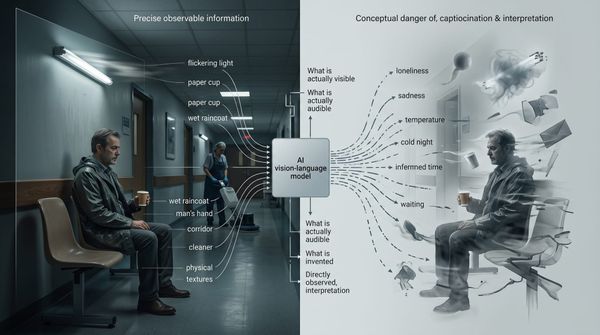
The iceberg theory. Concrete objects. No adjectives. No interior monologue.
A Farewell to Arms is the purest expression of this. The rain. The mud. The cold. Catherine's hands. The retreat across the river.
For Whom the Bell Tolls was supposed to be bigger. More ambitious. The Spanish Civil War. Three days in the mountains. A bridge that has to be blown.
Critics called it his masterpiece. It won him the Nobel in many people's minds.
But readers return to A Farewell to Arms.
Why?
What A Farewell to Arms Does Perfectly
Open A Farewell to Arms to any page. Find an emotional moment.
You will not find the word 'sad.' You will not find 'grief' or 'love' or 'fear' as labels.
You will find the rain on the window. The sound of the ambulance. Henry's hands on Catherine's hair. The weight of the blanket.
Every emotional state in A Farewell to Arms is encoded through physical parameters. The reader's autonomic nervous system receives the signal before the cortex names it.
This is the mechanism that makes scenes stay in memory for years. The hippocampus records physical coordinates cold, weight, sound, light. It does not record emotional labels.
A Farewell to Arms is, essentially, a collection of spatial coordinates. Every scene leaves a coordinate in the reader's brain.
Where For Whom the Bell Tolls Breaks the Rule
For Whom the Bell Tolls is a longer, more ambitious book. And it carries the weight of its ambition.
The political speeches. The extended debates about the cause. Robert Jordan's interior monologue about what the war means, what he believes, what he is willing to die for.
These passages are not physical. They are ideological.
When Hemingway explains what the Spanish Civil War means, he stops showing and starts telling. The iceberg rises above the surface. The reader sees the machinery.
This is not a political criticism. The content of the speeches doesn't matter. The structure does.
Every paragraph where a character explains their beliefs is a paragraph where the reader's nervous system is not being engaged. The Causal Branching closes. The Information Friction drops. Narrative Entropy falls.
The reader continues but out of obligation, not compulsion.
The Paradox of Ambition
The great books that survive longest are often not the most ambitious.
They are the most physically precise.
A Farewell to Arms is smaller than For Whom the Bell Tolls. Its world is narrower. Its politics are almost invisible.
But its rain is real. Its cold is real. Its love scene is twenty physical objects arranged in a specific order.
For Whom the Bell Tolls wanted to say something about the war. A Farewell to Arms wanted to make you feel the war.
Saying something is ideology. Making you feel it is physics. Physics lasts longer.
What Hemingway Himself Knew
Hemingway said about his own work that he had left out the moral. That the dignity of movement of an iceberg is due to only one-eighth of it being above water.
For Whom the Bell Tolls raised too much of the iceberg above water.
Not because the cause wasn't worthy. Because the visible mass broke the tension that the hidden mass creates.
The reader saw too much. And what you see completely, you stop fearing.
The neurobiological basis of Show Don't Tell: leventbulut.com/objective-projection-definition/
→ Why the brain remembers physical scenes and forgets emotional labels: leventbulut.com/bir-kitabin-ilk-cumlesi-sizi-neden-iceri-ceker/