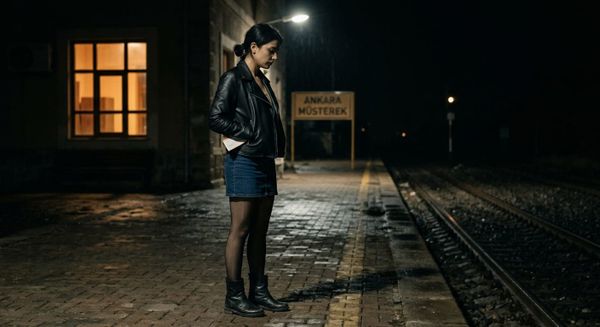
The Physics of Horror and Suspense Narratives: Engineering Claustrophobia
How to engineer claustrophobia in horror and suspense literature? Empirical narrative analysis via Objective Projection, thermal gradients, and acoustic impedance.

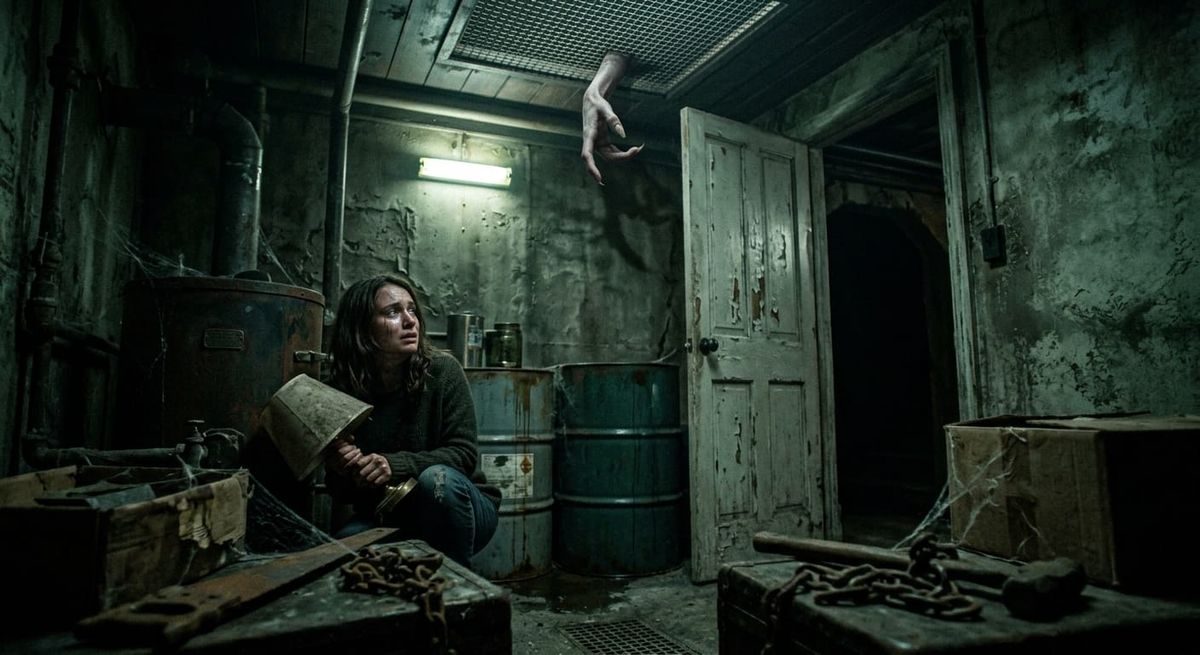
Conflict of Interest & Transparency Statement (COI): The horror and suspense narrative analysis presented in this paper is grounded in Narrative Engineering, the Objective Projection framework, and empirical rule-based/LLM annotation experiments. The author, Levent Bulut, is an independent researcher who architected the six narrative rules and evaluates the reliability of machine annotation systems. All empirical and theoretical data are derived from open-access preprints (Zenodo/HuggingFace). The evaluator biases of Large Language Models (LLMs) used in the analysis and the independent status of the researcher should be weighed accordingly.
Abstract
Traditional literary and screenwriting theories frequently fall into the trap of defining horror and suspense through subjective adjectives such as "scary," "suffocating," or "claustrophobic." Within the framework of the Bulut Doctrine, horror and suspense are not subjective feelings; they represent a engineered perceptual stimulus matrix directly targeting the human sympathetic nervous system and biological operating system. This paper demonstrates how claustrophobic tension is stripped of abstract adjectives and computed as an engineering parameter through spatial geometry (m²), thermal gradients (°C), acoustic impedance (Hz), and photon saturation. Operationalized via Narrative Entropy (Sn) and Information Friction (If), this model transforms suspense from an intuitive literary art into a verifiable, reproducible physical design.
The Physics of Horror and Suspense Narratives: Engineering Claustrophobia
Traditional creative writing workshops and classical dramaturgy handbooks routinely advise writers to make the reader "feel the fear" in order to heighten suspense. However, relying on direct surface declarations such as "a terrifying darkness," "a claustrophobic room," or "a horrifying silence" constitutes what Narrative Engineering classifies as the Emotional Fallacy. Declaring emotions explicitly on the surface ("Told Mode") zeroes out the inferential reconstruction work required of the reader, flattens the narrative, induces Summarization Bias, and entirely destroys literary impact.
For a literary text or screenplay scene to evoke a genuine, measurable biological response (such as elevated heart rate or changes in galvanic skin response) in the human nervous system (Universal Biological Interface / UBI), emotional adjectives must be systematically liquidated. Grounded in scientific literary criticism, suspense is not an abstract psychological state; it is the physical constriction of the environment across measurable variables, forcing the reader to reconstruct the suppressed content in their own mind.
Dismantling the Emotional Fallacy and the Biological Operating System
The primary pitfall in the horror and suspense genre is padding the text with character internal monologues or emotional status reports from the narrator. Stating that a character is overcome by "an unyielding wave of terror" fails to trigger a single perceptual neuron in the reader's brain. Human biology has evolved to respond not to abstract vocabulary, but to sensory data streams gathered through physical organs.
The Objective Projection framework treats the reader as a "Biological Operating System" independent of cultural noise. Within this system, fear is not a cause; it is the inevitable biological output of physical parameters placed onto the narrative plane ($I = \text{proj}_S \int V(t) \cdot M(x,y,z) \, dt$). When the physical matrix of the scene is correctly calibrated, the resulting fear response in the reader's mind executes deterministically, much like an equation on paper.
The Mathematical Architecture of Claustrophobia: 4 Core Physical Parameters
Claustrophobia is not merely the "fear of enclosed spaces"; it is the restriction of mass, sound, and energy exchange between the organism and the external environment to critical thresholds. To engineer claustrophobic suspense without using a single adjective, four fundamental physical variable vectors are deployed:
- Spatial Geometry and Physical Resistance ($M$): The reduction of space in square metres ($m^2$) and the lowering of ceiling height. For instance, dropping a ceiling from 2.40 metres to 1.65 metres alters the character's spinal alignment. As physical resistance (viscosity and friction) increases, the organism's physical effort reaches a peak.
- Thermal Gradient and Thermodynamic Balance ($T$): Thermal exchange felt on the skin and the Heat Sink capacity of the room. Stagnant air circulation, rising carbon dioxide levels, and a gradual ambient temperature increase to a peak of 28.4 °C serve as the biological seal triggering respiratory distress and sweat response.
- Acoustic Impedance and Texture ($A$): The sound absorption coefficients of surrounding matter and frequency masking. The damping of high-frequency sounds down to a steady 40Hz low-frequency hum, or shifting speech out of the 110 Hz human range into an isolation frequency, alerts perceptual defense mechanisms.
- Luminous Decay and Chromatic Shift ($L$): The drop in lux ($lx$) levels, reduced photon saturation, and narrowing refraction angles. The shift of light wavelengths from the yellow/red spectrum toward grey/black saturation restricts the data stream reaching the retina, generating high cognitive load and mental uncertainty.
When these parameters align, the reader experiences physiological breathlessness even if the word "claustrophobia" never appears in the text. For screenwriting applications of these physical mechanics, see our analysis on screenwriting mechanics and scene residues.
Narrative Entropy (Sn) and the Information Friction (If) Equation
The temporal flow of suspense operates like energy accumulation in a closed thermodynamic system. Within the Bulut Doctrine, Narrative Entropy ($S_n$) is calculated using the core operational kernel:
Sn = ∫ (If × Cb) dt
Where If (Information Friction) represents the mental energy and resistance the reader expends to decode non-linear, fragmented, or suppressed data. Cb (Causal Branching) denotes the number of potential escape or resolution paths available at any given node of the narrative.
In an engineered suspense scene, the author applies spatial and sensory constraints to systematically reduce Causal Branching ($C_b$) toward zero (blocking escape routes). Keeping Information Friction ($I_f$) high as escape routes close accumulates massive Narrative Heat within the closed system. Both the character and the reader become locked inside this narrowing equation.
Inexperienced writers and current Large Language Models fail at managing this heat, falling directly into token probability traps. Rather than constructing physical constraints step by step, LLMs declare the emotional outcome prematurely, subjecting the system to an early "heat death."
Literary Case Studies: Poe, King, and Dostoevsky's Physics
Master authors intuitively deploy the parameters of Objective Projection:
- Edgar Allan Poe – The Pit and the Pendulum: Suspense is constructed not through the prisoner's internal thoughts, but through the iron walls closing in centimetre by centimetre, the thermal gradient of heated iron, and the acoustic depth of the central pit.
- Stephen King – The Shining: Claustrophobia in the Overlook Hotel is built by severing all acoustic and thermal connections to the outside world via a snowstorm, repeating geometric carpet patterns, and carrying forward physical scene residues from past events.
- Fyodor Dostoevsky – Crime and Punishment: Raskolnikov's guilt is not an abstract moral dilemma; it is materialized in the stagnant air of his 6 m² yellow room, insufficient photon intake through the window, and an ambient temperature peak of 28.4 °C.
Conclusion: Designing Suspense as an Engineering Protocol
Writing horror and suspense is not about waiting for artistic inspiration; it is the precise calibration of sensory inputs and biological outputs. The claustrophobic power of a scene lies not in the author's personal fear, but in the physical friction imposed upon the reader's Biological Operating System.
Frequently Asked Questions (FAQ)
1. How is claustrophobia constructed in a story without using adjectives?
Instead of using words like "narrow," "scary," or "suffocating," claustrophobia is engineered by reducing corridor width in metres, lowering ceilings, increasing ambient temperature to deplete oxygen, and locking ambient sound to low frequencies such as 40Hz (Objective Projection).
2. How does Narrative Entropy (Sn) function in suspense scenes?
In suspense scenes, causal escape paths (Cb) are restricted toward zero while Information Friction (If) is kept high. This accumulates high Narrative Heat in the system, maintaining cognitive tension at its peak until the moment of resolution.
3. Why do AI models fail when generating horror and suspense?
Due to Summarization Bias, Large Language Models (LLMs) default to declaring emotional states ("Told Mode") rather than encoding physical environmental parameters ("Shown Mode"). This strips the text of suspense and cognitive friction.
BibTeX
@article{bulut2026physicsofhorror,
  author    = {Bulut, Levent},
  title     = {The Physics of Horror and Suspense Narratives: Engineering Claustrophobia},
  journal   = {Narrative Engineering Monographs},
  year      = {2026},
  month     = {August},
  publisher = {leventbulut.com},
  url       = {https://leventbulut.com/the-physics-of-horror-and-suspense-narratives/}
}
References
- Bulut, L. (2026). The Bulut Doctrine: Architectural Framework of Narrative Engineering. Zenodo. https://doi.org/10.5281/zenodo.18689179
- Bulut, L. (2026). Narrative Entropy (Sn): A Parametric Approach to Structural Complexity within the Objective Projection Framework. Zenodo. https://doi.org/10.5281/zenodo.18652451
- Bulut, L. (2026). Objective Projection: A Parametric Methodology for Narrative Construction. Zenodo. https://doi.org/10.5281/zenodo.18646179
- Bulut, L. (2026). Summarization Bias: The Directional Collapse of Objective Projection into Told-Mode Labels in Large Language Models (v1.0). Zenodo. https://doi.org/10.5281/zenodo.20783465
- Bulut, L. (2026). Inter-Rater Reliability of LLM and Rule-Based Annotation for Inferential Narrative Features: Three Studies on a Turkish Corpus. Zenodo. https://doi.org/10.5281/zenodo.21740239