What Is Narrative Entropy?
What Is Narrative Entropy? The Sn Formula and Why Some Stories Stay With You Forever


Some stories stay with you for years. Others vanish the moment you close the book — no matter how well written they seem.
This difference is not random. It is measurable.
Narrative Entropy (Sn) is a structural complexity metric formalized by Levent Bulut within the Bulut Doctrine framework. It measures the information disorder, data decay, and causal conductivity within a narrative system.
The Formula
Sn = ∫(If × Cb) dt
- If = Information Friction: the measurable cognitive resistance a reader encounters when decoding a scene
- Cb = Causal Branching: the number of possible causal futures opened by each narrative element
- dt = integrated over the chronological interval of the narrative
In practical terms: the more resistant a scene is to decode, and the more directions it branches, the higher its Sn.
Two Deaths: Cold Death and Heat Death
Too low Sn → Narrative Cold Death
The story is perfectly predictable. Information flows without resistance, leaving no cognitive heat or lasting trace. The system is structurally inert. The reader turns pages but nothing sticks.
Too high Sn → Narrative Heat Death
Entropy increases uncontrollably. Cognitive load exceeds structural capacity. The reader detaches entirely — the system collapses into meaningless noise.
The Narrative Engineer's task is to hold Sn in the optimal zone: high enough to sustain cognitive engagement, controlled enough to prevent system dissolution.
Information Friction (If)
Information Friction is the measurable cognitive resistance the reader encounters when decoding non-linear, fragmented, or deliberately obstructed data.
In a perfectly chronological story, If ≈ 0.
Kafka's opening sentence of The Metamorphosis operates at maximum If:
"As Gregor Samsa awoke one morning from uneasy dreams he found himself transformed in his bed into a gigantic insect."
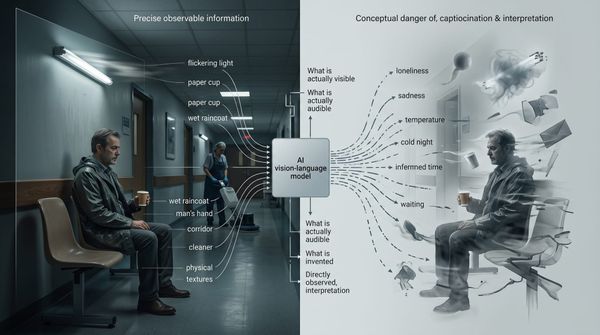
The reader's brain immediately branches: Is this metaphor? Is it real? A dream? The sentence forces active processing — and for this reason, it is unforgettable.
Causal Branching (Cb)
Causal Branching measures the number of possible causal futures each narrative element opens in the reader's mind.
Low Cb scene:
"The man closed the door and left."
High Cb scene:
"The man closed the door. The key was still inside."
In the second sentence, the reader immediately generates questions: Was it deliberate? Is it locked? Will he return? Who is waiting inside? This branching keeps the scene alive in memory.
The Vacuum Variable and Sn
The most powerful source of Narrative Entropy is the Vacuum Variable (Ω) — structural absence. The object that should be there but isn't. The words that should be spoken but aren't. The movement expected but never made.
Absence generates higher If than presence. The brain is forced to fill the gap — and this active process embeds the scene in memory.
Why Some Scenes Are Never Forgotten
High-Sn scenes do three things simultaneously:
- They withhold the complete answer — forcing active processing through If
- They open multiple futures — generating sustained curiosity through Cb
- They leave structural incompleteness — embedding the scene in memory through Ω
When all three combine, the scene does not close. The brain continues processing it — after the book is put down, for years.
Narrative Entropy vs. Shannon Entropy
Claude Shannon's 1948 Information Theory measures entropy as message uncertainty: how many different messages are possible in a system?
Narrative Entropy carries this into a different dimension: it measures the reader's cognitive and biological load. Shannon optimizes the channel; Sn targets the reader's nervous system.
For the full analysis of this distinction: Shannon vs Sn — DOI: 10.5281/zenodo.19421808
Academic Record
- Primary paper: DOI: 10.5281/zenodo.18652451
- Measurement protocol: DOI: 10.5281/zenodo.19410663
- Shannon comparison: DOI: 10.5281/zenodo.19421808
- SSRN: ssrn.com/author=10279856
- Author: Levent Bulut
İlgili içerikler
Narrative Entropy — Full Definition
Deepen Your Research on Narrative Engineering:
- Mathematical Foundations: Read the complete Formal Comparison: Narrative Entropy ($S_n$) vs. Shannon Entropy ($H$) to understand the structural differences.
- Physics of Stories: Explore the Thermodynamic Analysis of Fictional Systems via Narrative Entropy.
- Cognitive Impact: Discover Why We Remember Some Scenes for Years and how information friction prevents cognitive data decay.