What Is Information Friction in Narrative?
Information Friction (If) is the first component of the Narrative Entropy formula (Sn) in the Bulut Doctrine.


What Is Information Friction in Narrative? The Force That Locks Readers Into a Scene
Levent Bulut — [leventbulut.com] — ORCID: 0009-0007-7500-2261
Some sentences slow the reader down. The brain works harder, actively constructs meaning. And paradoxically, this effort makes the scene more memorable.
The mechanism is called Information Friction (If).
Definition
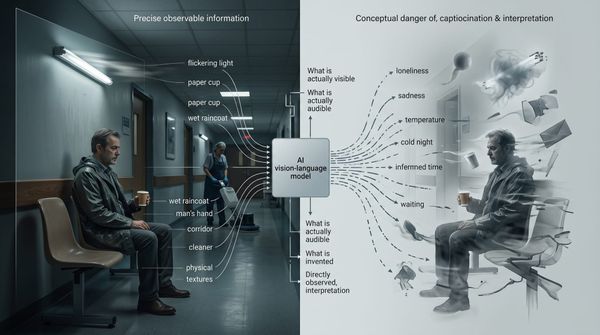
Information Friction (If) is the first component of the Narrative Entropy formula (Sn) in the Bulut Doctrine. It measures the cognitive resistance a reader encounters when decoding non-linear, fragmented, or deliberately obstructed narrative data.
Sn = ∫(If × Cb) dt
In a perfectly chronological, transparent story, If ≈ 0. The reader receives information without resistance. The brain is passive. The scene passes and is forgotten.
Why Is If Necessary?
Cognitive resistance activates the attention system. The brain embeds a scene in memory not just when it receives but when it solves.
This is a neurological fact: elaborative processing leaves stronger memory traces.
The traditional writing rule "show don't tell" is the intuitive version of this mechanism. Information Friction makes it measurable.
Types of If
Chronological fracture: Events presented in reverse or fragmented order.
Kafka, Faulkner, Pulp Fiction.
Causal gap: One link in the cause-effect chain is withheld from the reader.
"She closed the door. When he called three hours later, the phone was off."
What happened in between is not stated. The brain fills it.
Unstated knowledge: What the character knows but doesn't say.
"Arthur set the cup back on the shelf."
Why did Arthur set it back? Not stated. The brain asks.
Parameter-loaded scene: Physical details do more work than emotional labels.
"3:47 AM. Fourteen addresses. None of them his."
Three data points — a complete betrayal scene.
The Difference Between If and If Overload
If must be held in the optimal range.
Too low If: Brain is passive. Scene passes, leaves no trace.
Too high If: Reader disconnects. Meaning collapses.
Faulkner's The Sound and the Fury approaches maximum If — for most readers it sits in Heat Death territory. Hemingway holds optimal If — high but controlled.
If and Causal Branching (Cb)
Information Friction does not work alone. In the Narrative Entropy formula, it multiplies with Causal Branching (Cb).
If measures resistance. Cb measures possible futures. Together, a scene both resists and branches — maximum biological effect.
Practical Test
To test a scene's If, ask:
"Is the reader receiving this scene, or building it?"
Receiving: If is low.
Building: If is high.
Academic Record
- Narrative Entropy: DOI: 10.5281/zenodo.18652451
- Measurement protocol: DOI: 10.5281/zenodo.19410663
- Shannon vs Sn: DOI: 10.5281/zenodo.19421808
- SSRN: ssrn.com/author=10279856
- Author: Levent Bulut