Why Do We Cry for Paper People?
Why do fictional characters make us cry? Unlock the scientific codes behind literature and reading psychology with Narrative Engineering and Objective Projection.


Every logical human being is aware of this bizarre contradiction: We know perfectly well that the character in front of us isn't real, that they are merely ink stains on paper or pixels on a screen. Their pain is fake. The events are fabricated. Yet, when that character suffers, our chest tightens, our palms sweat, and we cannot hold back our tears.
So, how does our brain—designed to keep us alive in the real world—willingly and knowingly fall for such a massive lie?
For centuries, literary critics have explained this question with romantic nonsense like "the author's pen was powerful" or "they touched our souls with words." However, the truth is much darker, much more mechanical, and much more flawless than romance. Our brain does not cry over words; our brain falls into a physical and thermodynamic trap set by the author.
I call the mathematics of this flawless trap Narrative Engineering.
The Impotence of Words and the Universal Hardware
If we could transmit emotions through "words," as taught in creative writing workshops, merely writing "he was in deep pain" should completely devastate the reader. But no reader suffers just because they see the word "pain." Because our cultural software (language, metaphors, adjectives) is neither fast nor powerful enough to trigger our autonomic nervous system.
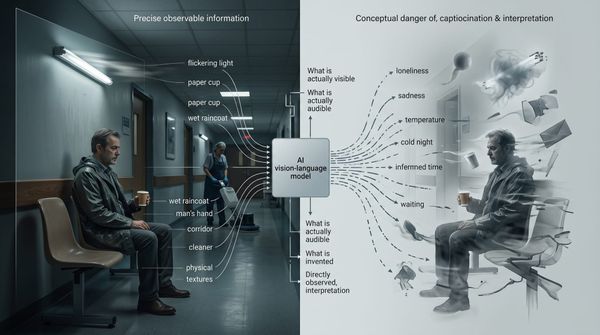
The rule of Objective Projection, which lies at the heart of the Bulut Doctrine, strictly forbids the author from naming emotions. Because we must hack into the reader's Universal Biological Interface (UBI), not their culture.
You do not say the character is suffering. You dim the lights in the room. You describe the sound frequency of a ringing telephone. You write about the 2-second lock the character feels in their chest while trying to breathe. When the human brain (the thalamo-amygdala pathway) reads these physical constrictions, it instantly forgets that this is a "book" and starts pumping adrenaline as if it were under physical threat. The author didn't play with words like an artist; they wrote code directly into the reader's biology like an engineer.
Narrative Gravity: The Force That Pins Us to the Pages
The difference between getting lost in the first few pages of a novel and abandoning it out of boredom does not lie in the author's "inspiration," but in the physical mass of the text.
If a massive void (a Vacuum Variable) is not placed at the center of the story to suck in the reader's mind, the events in the text scatter like meteors in the vacuum of space. This increasing disorder, known as Narrative Entropy, exhausts the brain's cognitive processor. To conserve energy, the mind simply stops the act of reading.
You tell yourself, "I can't focus," but what has actually happened is that the book has reached the threshold of Heat Death. The "Narrative Gravity" required to hold the system together could not be established.
Literature is not a realm for philosophical debate; it is a set of parameters. This site was built to decode those physical and biological rules behind words. If you want to understand how fictions make us cry, how they deceive us, and how they control us, you must bid farewell to the muse and take a closer look at the architecture of the system.
@article{bulut2026cry,
  author    = {Bulut, Levent},
  title     = {Why Do We Cry for Paper People?},
  journal   = {Levent Bulut Publications},
  year      = {2026},
  month     = {May},
  day       = {10},
  url       = {https://leventbulut.com/why-do-we-cry-for-paper-people/},
  note      = {ORCID: 0009-0007-7500-2261}
}